
Update
January 23, 2026
Ottawa National Forest Proposes Massive Logging Project
This project would extend for 40 Miles from the Sturgeon River Gorge Wilderness to U.S. 2 near Iron River
By Kelly Thayer, Senior Policy Advocate
3/5/26 Update:
Read recent local press coverage in:
- Michigan Public Radio: Plan to Clear-Cut in UP National Forest Raises Concerns Among Environmentalists
- Bridge Michigan: US Plans to Clear-Cut in Michigan Forest. Some Fear for Endangered Species
1/23/26 Update:
ELPC on January 22 submitted extensive comments signed by us, eight U.P.-based and statewide organizations and businesses, and a national environmental group actively opposing this project. Additionally, we submitted a letter signed by 21 Michigan companies and organizations that expressed their serious concern about the impact on the Ottawa. These supporters represent thousands of Michiganders opposing the clearcutting, roadbuilding, and gravel mining proposed in our national forestlands.
Thank you to Chicken Tramper Ultralight Gear, Environment Michigan, Keweenaw Charter Fishing Co., Keweenaw Youth for Climate Action, Michigan Environmental Council, Michigan League of Conservation Voters, Natural Resources Defense Council , Sierra Club Michigan Chapter, and Upper Peninsula Environmental Coalition for joining our comments.
And thank you to Bryan Mitchell Photography, Cafe Bodega, Flow Water Advocates, Great Lakes Great Responsibility Foundation, Groundwork Center for Resilient Communities, Haight’s Wanderings Guide Service, Houghton County Democratic Party, Keweenaw Coffee Works, Laughing Whitefish Bird Alliance, MAWBY, Michigan Audubon Society, Michigan Chapter of the Soil and Water Conservation Society, National Wolfwatcher Coalition, Newaygo Brewing Company LLC, Northern Michigan Environmental Action Council, Shepherds of the Wilderness, Stewards of Kleinstuck, Student Biodome Project, Temple Kol Ami Social Acton Committee, Trails North, Wisconsin Forest Conservation Task Force for joining the letter.
The Ottawa National Forest in Michigan’s Western Upper Peninsula on December 18 released an Environmental Assessment for by far its largest logging project in at least a quarter century, covering 127,828 acres or about 200 square miles – nearly 1½ times the size of the city of Detroit.
The Silver Branch Vegetation Management Project seeks to clear-cut aspen and paper birch trees and selection-cut and clear-cut northern hardwoods across a project area that extends for about 40 miles from the northern border of the Sturgeon River Gorge Wilderness Area south to U.S. 2 near Iron River. The vast proposal encompasses more than one-eighth of the entire national forest and about one-quarter of the Ottawa’s public lands deemed suitable for commercial logging.
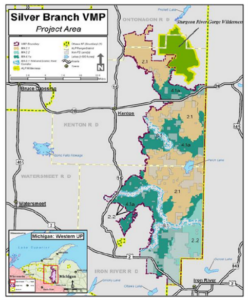 The project’s 30-day public comment period will span Christmas, New Year’s, and Martin Luther King Jr. Day and end approximately Jan. 21, 2026. If approved, the proposed logging would continue for 30 years.
The Environmental Law & Policy Center will closely analyze and comment upon the Environmental Assessment and the likely impacts of the proposed logging to the mature forest, wildlife, and freshwater resources, impacts which the assessment found not to be significant. After we complete our initial review in early January, ELPC will develop and share a take-action opportunity to provide the public with a convenient means to call for protection of our public lands. Stay tuned!
Growing the Sturgeon River Gorge Wilderness Area
ELPC and the Keep the U.P. Wild coalition, which we coordinate, in July submitted scoping comments requesting that the Ottawa National Forest modify its Silver Branch project by adjusting its project boundary to exclude the coalition’s 2,000-acre proposed addition to the Sturgeon River Gorge Wilderness Area in order to preserve the opportunity for future wilderness designation of the addition by Congress. We also requested that the Ottawa’s staff complete a full Environmental Impact Statement for the enormous logging project. Neither request was honored.
The Sturgeon River Gorge Wilderness Area Addition deserves to be designated as Wilderness given its value to local wildlife and its suitability for remote recreation amidst nature’s solitude. Moreover, this addition would expand the existing protected area to nearly 19,000 acres of contiguous wilderness and compound the benefits of its designation.
Since mid-2021, Keep the U.P. Wild has grown to more than 350 members advocating to protect the Sturgeon River Gorge Wilderness Addition and three other areas covering more than 50,000 acres of the Ottawa National Forest as Wilderness. These designations would help bolster the Western Upper Peninsula’s multimillion-dollar outdoor recreation and tourism economy by enshrining special forms of recreation like hiking along the North Country National Scenic Trail, camping, rock climbing, hunting, fishing, birding, kayaking, and snowshoeing – and prohibit logging and motorized vehicles.
Trump Administration Seeks to Boost Logging, Minimize Public Engagement Across National Forest System
The Ottawa National Forest’s massive Silver Branch logging project comes amidst a push nationally by the Trump Administration to increase logging by 25 percent across the national forest system and minimize environmental review and public scrutiny.
In the U.S. Forest Service’s 20-state Eastern Region, the Ottawa National Forest already is second only to Wisconsin’s Chequamegon-Nicolet National Forest for the amount of board feet of lumber cut and sold each year. In FY2024, the Ottawa sold 82.8 million board feet of lumber, some 13% of the total for the Eastern Region.
Congress, meanwhile, is advancing a bill called the Fix Our Forests Act (FOFA) that purports to be about wildfire prevention. In fact, it is a dangerous rollback of environmental safeguards for our national forests that could open millions of acres of public lands to clear-cutting and weaken bedrock protections like the Endangered Species Act and the National Environmental Policy Act.
The announced increase in timber (logging) targets by 25% follows other actions by the U.S. Department of Agriculture and the U.S. Forest Service that threaten the integrity of our National Forests, such as:
- Declaring a fictitious “emergency” in national forests and claiming that emergency logging is the solution.
- Firing thousands of Forest Service employees and prioritizing those remaining on increasing commercial logging, resulting in less planning and oversight of commercial logging in national forests.
- Proposing to repeal the 2001 Roadless Rule, which protects 58 million acres of national forests from commercial logging, including in all three of Michigan’s national forests. The Roadless Rule has consistently had strong public support and set a record for the most public comments on rules.
- Stripping environmental review and protections from commercial logging for over 112 million acres in national forests.
- Undermining planning for climate change while boosting incentives to log mature and old-growth trees that best capture and store atmospheric carbon that accelerates climate change.
Our national forests in Michigan – the Ottawa, Hiawatha, and Huron-Manistee – and across America are part of our natural heritage. And they provide essential outdoor year-round recreation opportunities, support hunting and are essential for clean air and water, wildlife habitat, and carbon storage. Weakening oversight and accountability with FOFA, on top of all the harmful rollbacks from the Trump Administration, will put these resources, and nearby communities, at greater risk.

Kelly Thayer,
Senior Policy Advocate
Kelly Thayer is a Senior Policy Advocate at ELPC. He coordinates a broad effort to establish new Wilderness in the Western Upper Peninsula of Michigan and advances the transformation of Michigan's retired coal plants into parklands, solar generation, and energy storage opportunities.
MORE FROM Kelly Thayer