Update
February 18, 2026
So Much for Partnership: Weaker Oversight Puts Our Water at Risk
EPA’s latest proposal would undercut partnership with states and tribes that have protected the nation’s waters for 53 years.
By Nancy Stoner, Senior Attorney
There are lots of kinds of federal projects that impact waterways. Some of them are good for water quality – like projects to protect or restore wetlands, the nation’s kidneys. But many have other goals, some of which conflict with the Clean Water Act’s goal of protecting rivers, lakes, and coastal waters. The Clean Water Act has worked for more than 50 years to make drinking water safer, beaches cleaner, fish more abundant and safer to eat, and our country more beautiful. If a federal project will destroy a wetland or pollute a stream, who decides how to balance those competing goals?
 Congress answered that question very clearly in Section 401 of the Clean Water Act – the state or tribe whose waterway is at risk should decide whether modifications to the project are needed to protect water quality. That’s called “cooperative federalism” and the data show that it works. States and tribes approve 99.4% of federal projects after once they are conditioned to ensure they won’t pollute waterways. States and tribes look at the risks to waterways, listen to the scientists, listen to community concerns, and condition these projects to protect water quality, just as Congress intended.
EPA’s proposal would upend this system of partnership between federal, state, and tribal governments to protect water quality. ELPC filed comprehensive comments this week, calling to preserve cooperative federalism in clean water protection.
What does the proposal do?
It strips states and tribes from of authority to protect their waterways from federal projects that will pollute them – projects that destroy wetlands, dump toxins in drinking water supplies, kill fish, or close beaches.
Why is EPA proposing this rule?
EPA says flat out that their proposal not about protecting public health and it isn’t about preventing environmental harm. But, isn’t protecting public health and the environment supposed to be EPA’s job? Yes, it is!
 But, the Trump EPA is not focused on the same goals as Congress was when it passed the Clean Water Act. Again, EPA says candidly that this proposal is not about safeguarding the nation’s waters or even about enabling states and tribes to protect the more than 80% of waterways that are no longer protected under the Clean Water Act due to the Sackett Supreme Court case as EPA would read it.
Instead, the Trump EPA wants to make it cheaper and easier for federal projects to go forward, whether or not they are bad for water quality, and especially if they benefit the fossil fuel industry.
How does the public benefit from the rule already on the books?
We all benefit enormously from the way Section 401 has historically worked. For example, in response to public comments and concerns, certifying authorities have required:
- that dams preserve stream flow necessary for aquatic life and provide fish passage for spawning;
- that pipeline projects control runoff and other water pollution; and
- that marsh and wetland destruction be avoided, minimized, and mitigated.
These protections of water quality have been accomplished because Congress gave states and tribes fulsome powers under the Clean Water Act.
These powers were intended to allow states and tribes to consider federally permitted projects holistically in terms of their likely impact to the chemical, physical, and biological integrity of the nation’s waters and to deny or condition such projects so that water quality is protected and enhanced. EPA now seeks to interfere with Section 401’s cooperative federalism approach, an approach that has empowered states and tribes to use state and tribal authorities in addition to those available to EPA or the Corps to protect those waterways the public uses for drinking water, irrigation, recreation, manufacturing, and much, much more from federal projects that would otherwise destroy or pollute them would destroy or pollute waterways that the public uses for drinking water, irrigation, recreation, manufacturing, and much, much more.
What about here in the Midwest?
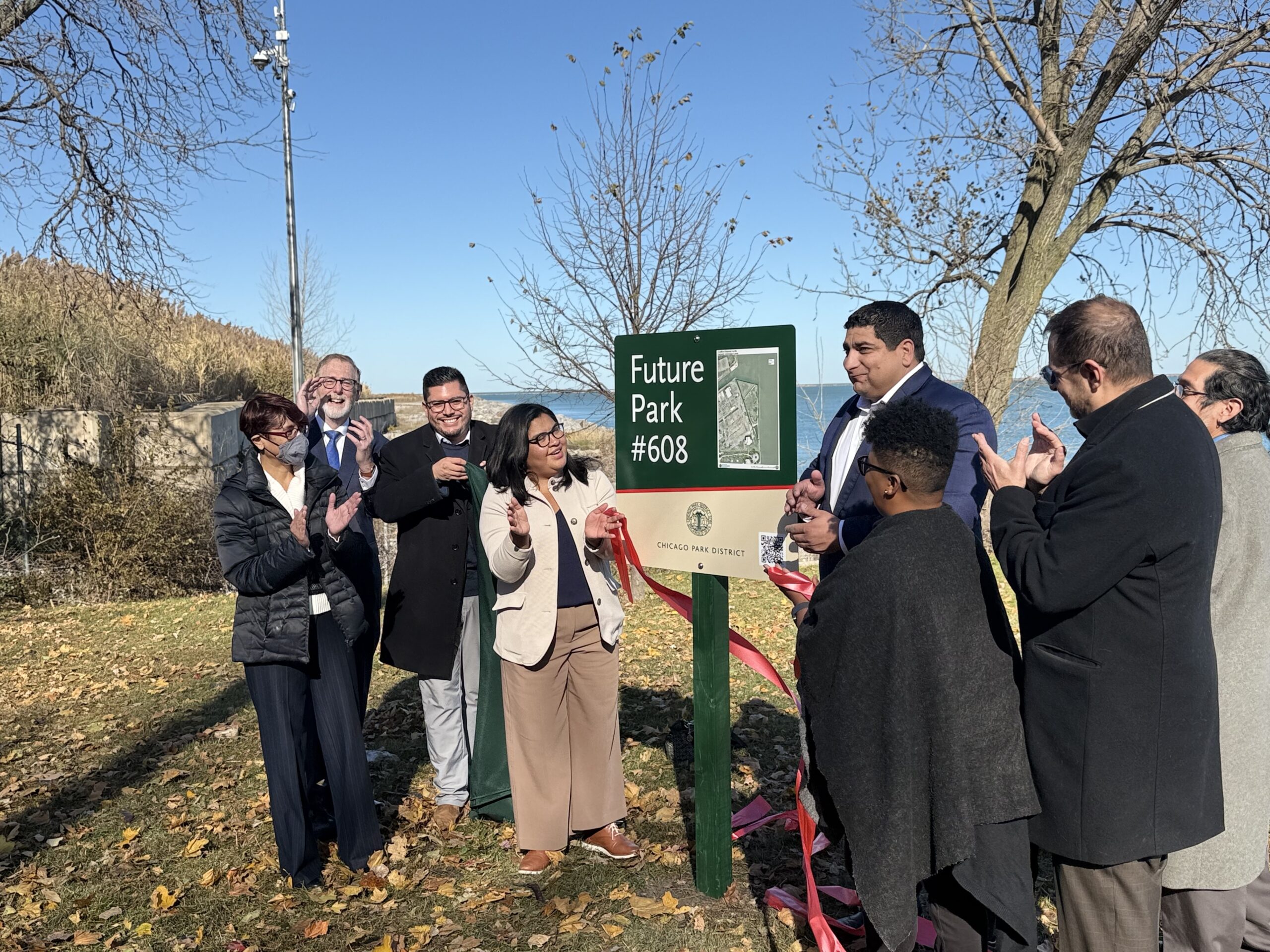
Advocates and elected officials unveiling the park sign in Calumet Park
As Howard Learner explained in a recent blog, Chicago recently experienced a compelling example of Section 401 in action. ELPC and our local partners stopped the U.S. Army Corps of Engineers from building a 25-foot high, 43-acre toxic waste landfill along the Lake Michigan shoreline on Chicago’s Southeast side, which has long been overburdened by pollution. In that case, the Illinois EPA denied or indicated that it would deny three required state water quality permits, including the Section 401 certification, for the proposed toxic waste landfill.
Those state water quality permit denials were the key turning point for achieving this victory in the federal court litigation and the court of public opinion. The Army Corps acknowledged that without obtaining these state permits, it could not go forward with its toxic waste dump. Now, instead of a toxic waste dump, the community is getting a new park on the banks of Lake Michigan.
ELPC stands with its state and tribal brethren to fulfill the purpose of the Clean Water Act – clean, safe, usable waterways for this generation and those who follow.
That’s how Section 401 is supposed to work – federal projects that benefit local residents, local economies, and public health go forward. But if a project will pollute a local waterway, it cannot go forward until changes or conditions are made to protect public health. That’s a power that Congress gave to states and to tribes many years ago, and it’s one that ELPC supports.
ELPC stands with its state and tribal brethren to fulfill the purpose of the Clean Water Act – clean, safe, usable waterways for this generation and those who follow.

Nancy Stoner,
Senior Attorney
Nancy Stoner is a Senior Attorney with ELPC focused on clean water issues.
MORE FROM Nancy Stoner