
Story
April 16, 2026
3 Clean Energy Priorities for Midwest Data Centers
Across the region, policymakers are now writing the rules that will shape how this growth plays out for electric grids, climate goals, and household energy bills.
By Brad Klein, Managing Attorney
The explosive growth of data centers is reshaping the U.S. energy sector, creating significant new electricity demand. Here in Illinois, for example, ComEd’s data center pipeline includes more than 75 large-load projects that are expected to draw over 28,000 megawatts of energy. That’s over twice as large as ComEd’s highest-ever 24,000-megawatt peak demand in its 118-year history.
Across the region, policymakers are now writing the rules that will shape how this growth plays out for electric grids, climate goals, and household energy bills. Three priorities should guide them.
1) Make data centers pay for the infrastructure they require
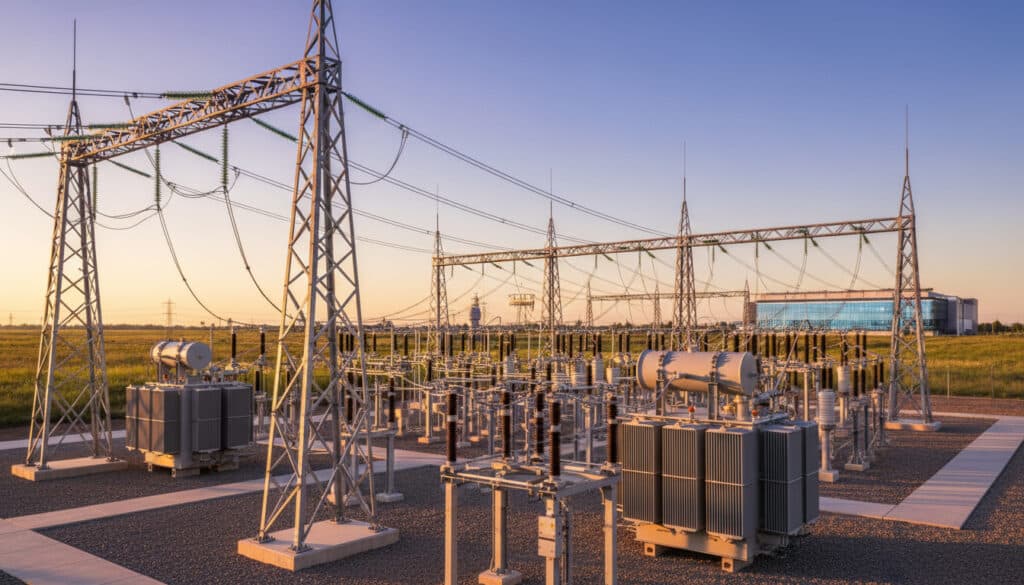
Data center power infrastructure
Data centers and other major customers should pay their fair share of the transmission and distribution infrastructure — the poles, wires, and grid upgrades — that their facilities require. In many Midwest states, those costs are currently spread across all ratepayers.
Customers who create new demand should be responsible for the costs that come with it, not their neighbors.
2) Adopt a “bring your own” new clean energy model
Data centers should procure their own new clean energy supply and capacity to meet their electricity needs — rather than drawing on existing grid resources and driving up demand for fossil fuels. A “bring your own” clean energy requirement protects consumers from rising energy prices while avoiding pollution and keeping states on track toward a cleaner energy future. Several Midwest legislatures and utility commissions have an opening to establish this standard now.
3) Protect communities from local impacts
Even low-emission data centers can cause harm at the local level. Powering them can mean running polluting diesel backup generators or keeping aging fossil plants online longer than planned. Some facilities bring noise, light, or significant water use to surrounding neighborhoods. Midwesterners — especially those in communities already overburdened by pollution — should not bear the health or quality-of-life costs of this buildout.
The Midwest’s Opportunity to Lead
The Midwest has real leverage here. Data centers want to locate in the region, which means states can set high standards and still attract investment. The policy decisions being made right now will determine whether this boom strengthens the grid and supports a clean energy future or locks communities into higher costs and more pollution for decades to come. ELPC will be at the table, doing our part to ensure that the rise of data centers accelerates the clean energy transition, rather than derailing it.
For an example of ELPC’s impact, read more about the Illinois Commerce Commission’s order to investigate the risks of data center risks in ComEd’s territory.

Brad Klein,
Managing Attorney
Brad Klein is a Senior Attorney working on accelerating renewable energy policies and development across the Midwest.
MORE FROM Brad Klein