
Bloody Red Shrimp
June 30, 2026
Bloody Red Shrimp: Lakers Spread New Invasive Species into Lake Superior
EPA exempted many Great Lakes ships from installing invasive protection equipment on ballast systems, and new invasives are seizing the opportunity
By Wendy Bloom, Senior Attorney & Elise Zaniker, Associate Attorney
Lakers are the most important cause to stop the spread of invasive species throughout the Great Lakes. This is because the U.S. Environmental Protection Agency gave a key exemption to these huge freighters that operate exclusively in the Great Lakes. EPA does not require Lakers to install and operate ballast water management systems (BWMS), which are devices proven to effectively trap and kill such species before Lakers expel their ballast water back into the Great Lakes. Lakers take in enormous amounts of lake water in one Great Lakes location to their ballast tanks for stability and discharge that water elsewhere in the Great Lakes. Unfortunately, the bloody red shrimp is an invasive species just confirmed to have spread and become established in Lake Superior all because Lakers are not required by EPA to install BWMS.
How do we know the bloody red shrimp is established in Lake Superior?
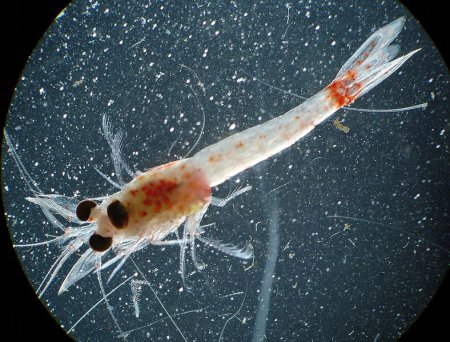
Bloody Red Shrimp
Sadly, we learned this month that the Lakers have done it again. Just this month, Professor Donn Branstrator at the University of Minnesota Duluth published his findings showing that the bloody red shrimp is now officially established in Lake Superior. Ocean freighters brought the crustacean, native to Europe and Asia, to the lower Great Lakes 20 years ago in their ballast water. EPA now requires ocean freighters to install BWMS, but Lakers are exempt. As a result, Lakers are continuing to spread the bloody red shrimp throughout the Great Lakes. Now, with a self-sustaining population in Lake Superior confirmed, the species is officially established in all five Great Lakes due to Lakers. This is not the first species to spread this way, and it will not be the last if EPA fails to regulate Lakers adequately.
What are ELPC and environmental partners doing about EPA’s failure to regulate Lakers?
We filed a lawsuit to challenge EPA’s failure to require Lakers to install BWMS. ELPC filed this lawsuit on behalf of itself, the Alliance for the Great Lakes, Minnesota Environmental Partnership and National Wildlife Federation with assistance from students at the Environmental Law & Sustainability Clinic at the University of Michigan Law School. And, Michigan’s Department of Environment, Great Lakes and Energy, along with Illinois and Vermont, filed a friend of the court brief, in support of our lawsuit. You can review all these legal briefs here, in our prior blog.
As we explained in our Opening Brief to the D.C. Circuit Court of Appeals, EPA should have required Lakers to install BWMS, which would have greatly reduced the risk of the bloody red shrimp spreading into Lake Superior. Instead, EPA ignored Congress’s clear directives and unlawfully exempted Lakers from regulation.
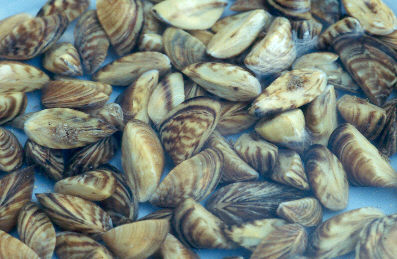
Zebra Mussels
The law is on our side and we hope the D.C. Circuit will rule in our favor and reject EPA’s final rule allowing Lakers to discharge untreated ballast water, so that new invasives do not continue to spread and become established throughout all of the Great Lakes. According to the State of the Great Lakes Report prepared by the U.S. EPA and Canada, from 2011-2020, new invasive species became established in all five Great Lakes due to secondary spread. Lakers are the largest risk for secondary spread because they take in huge amounts of lake water in one location and discharge it in another place within the Great Lakes.
Previous invasive species, like the zebra mussel, brought in and spread throughout the Great Lakes from ballast water, have caused billions of dollars in damage and each year the Great Lakes Region spends over $100 million to address aquatic invasive species. The next billion-dollar problem could be lurking in Lakers’ ballast tanks as we speak. The Great Lakes cannot afford EPA’s failure to regulate Lakers.

Wendy Bloom,
Senior Attorney
Wendy Bloom is a Senior Attorney at ELPC with a focus on protecting the Midwest's wild and natural places and Great Lakes.
MORE FROM Wendy Bloom
Elise Zaniker,
Associate Attorney
Elise Zaniker is an Associate Attorney at ELPC. Elise graduated magna cum laude from Washington University School of Law and received her B.S. in Environmental and Ecological Engineering with highest honors from Purdue University.
MORE FROM Elise Zaniker