
ELPC Events
April 29, 2026
Electric School Buses Hit the Road in Grand Rapids
A former student, now ELPC intern, reflects on the benefits of cleaner air for young Michiganders
By Terra Workman, ELPC Spring Intern 2026
As a student in Grand Rapids Public Schools in Grand Rapids, Michigan, school buses were an integral part of my life.
In middle school, it was a 45-minute ride home every afternoon from school. In high school, it was evening or early morning rides to away games with my soccer team. Like many of the 25 million students in the United States that rely on school buses for transportation, the loud roaring of the buses at the curb, the worn leather seats, and the familiar diesel smell were hallmarks of my public school experience.
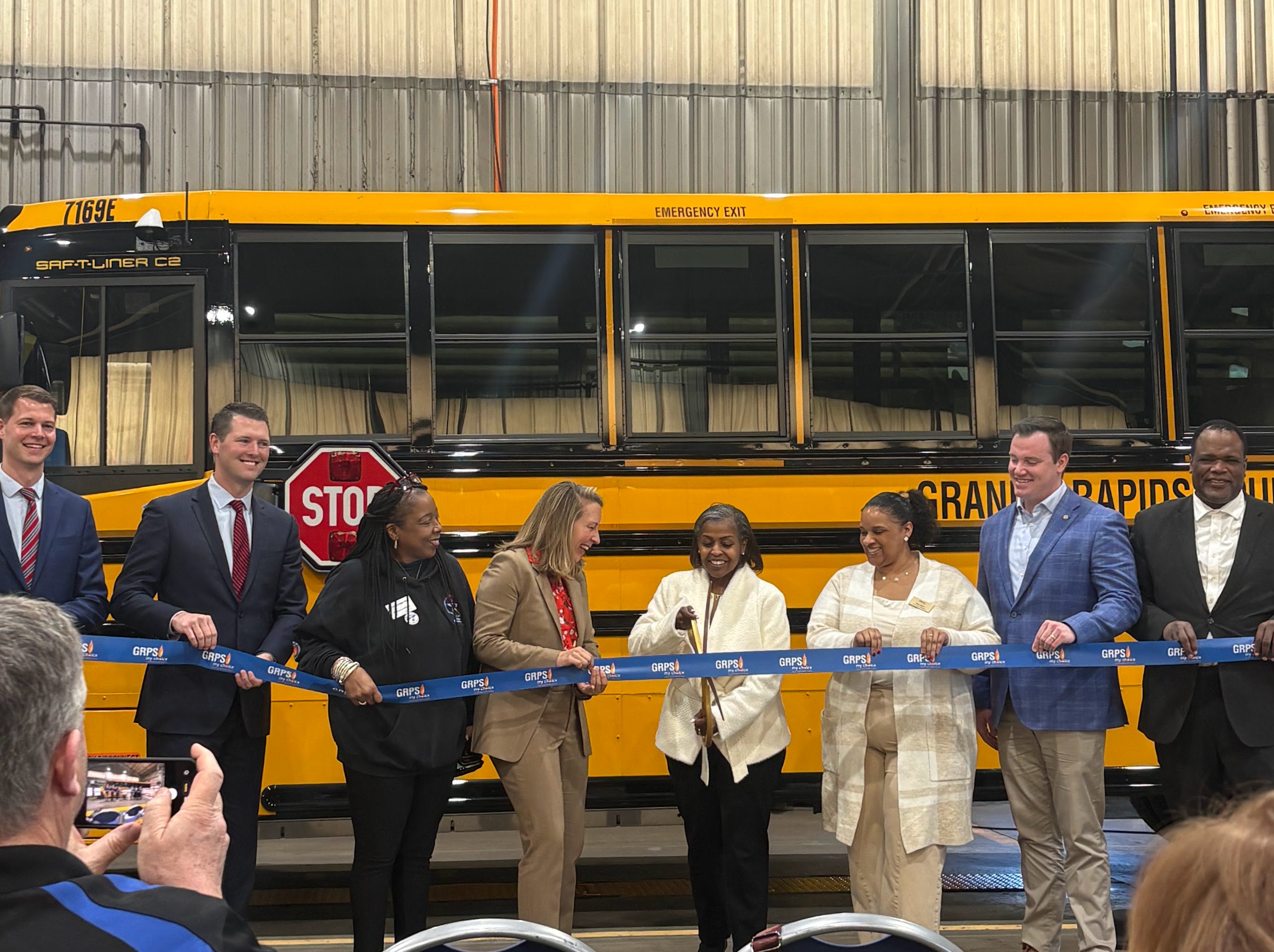
Grand Rapids electric school bus ribbon cutting
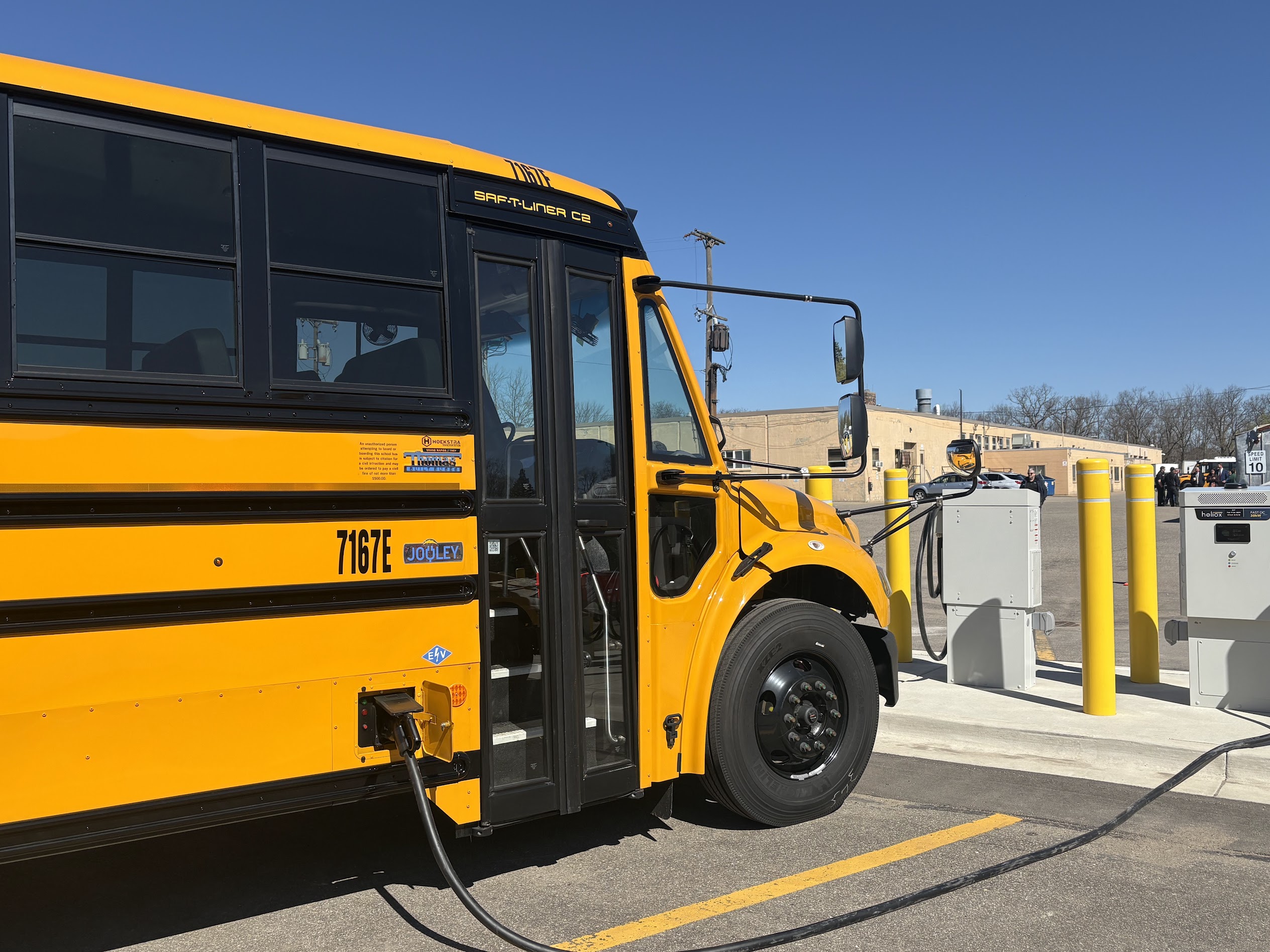
But, for the current students in Grand Rapids Public Schools, that is changing. On April 20th, Grand Rapids Public Schools held a ribbon-cutting event for their new fleet of 15 electric school buses. The event brought together partners from the school district, Dean Transportation, Consumers Energy (who contributed to the process of securing funding, acquiring buses, and building charging infrastructure), and others including the Environmental Law & Policy Center, which has been a long-time advocate for electric school buses across the Midwest. As an intern with ELPC this spring, I was excited to join in the festivities and celebrate a clean air future for my community.
The new emission-free models are cleaner, quieter, and more sustainable than traditional diesel buses. According to Christopher Dean of Dean Transportation, the first 7 of these buses will be on the road by late April. Eventually making up just over 11% of GRPS’s total school bus fleet, they will provide clean transportation to a large chunk of the district’s 13,000 students.
The launch of electric school buses in Grand Rapids marks an important milestone in its sustainability efforts and demonstrates the power of local communities coming together to build better futures for their youth.
The “Revolution of the School Bus”
In Michigan, Grand Rapids is one of 81 school districts that have been awarded electric school buses from a variety of state and federal funds. The 15 buses to serve Grand Rapids were enabled by $5.2 million in funding from the US EPA’s Clean School Bus Program and $1.5 million from Michigan’s Clean Bus Energy Grants. Grand Rapids’ bus rollout follows a pattern of transitioning from diesel to electric that we are seeing across the country.
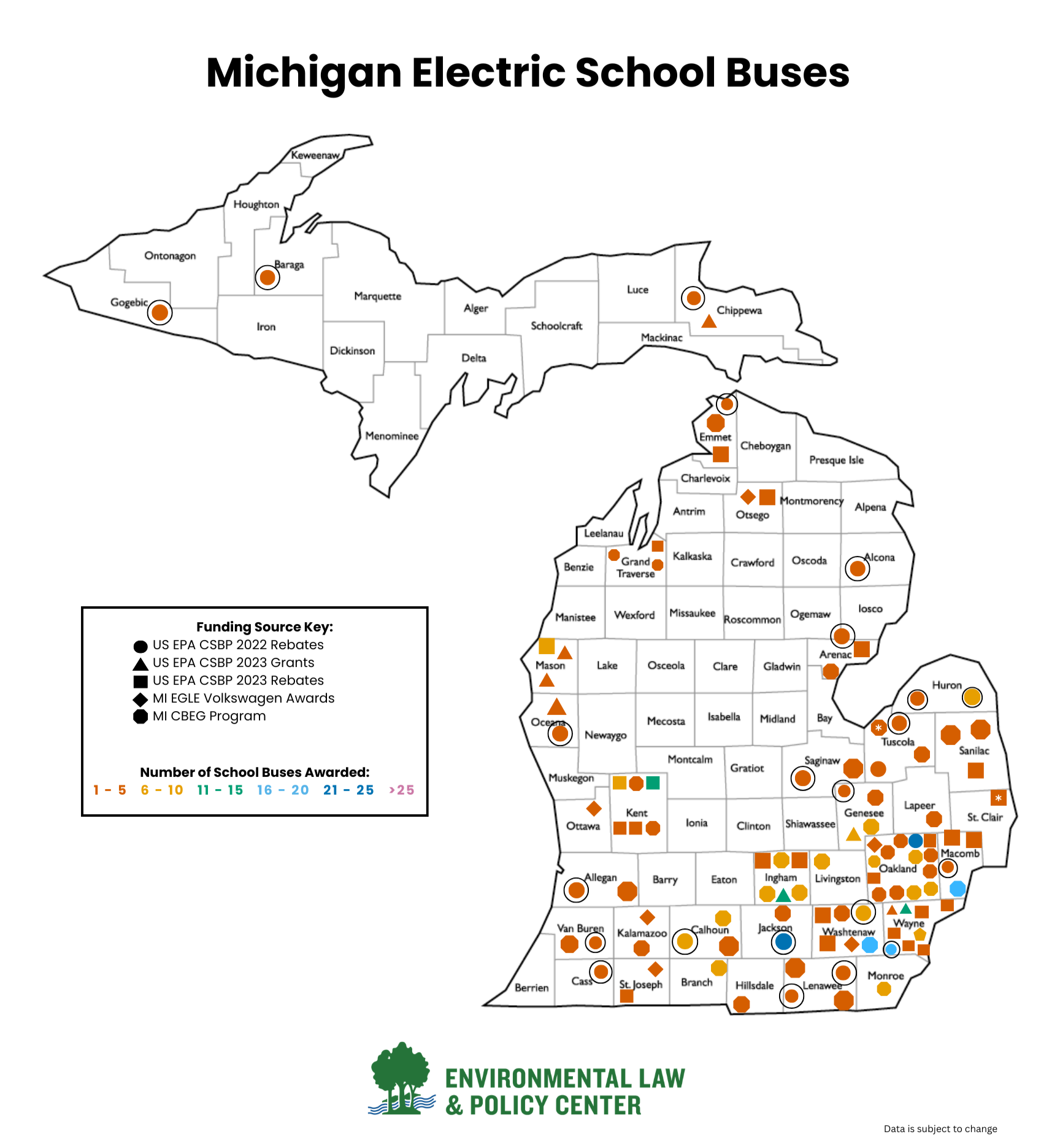
Electric school buses in Michigan
As a Dean Transportation staff member said during the launch event, we truly are witnessing the “revolution of the school bus.” This is for good reason. Electric buses have zero tailpipe emissions, decreasing their contribution to climate change and improving air quality. The elimination of diesel fumes is particularly important given that school bus passengers are most often young children who are especially vulnerable to pollutants. Furthermore, despite higher upfront costs, electric buses often save money over their lifespan due to reduced fuel and maintenance costs, providing an added incentive for school districts.
The Impact in Grand Rapids
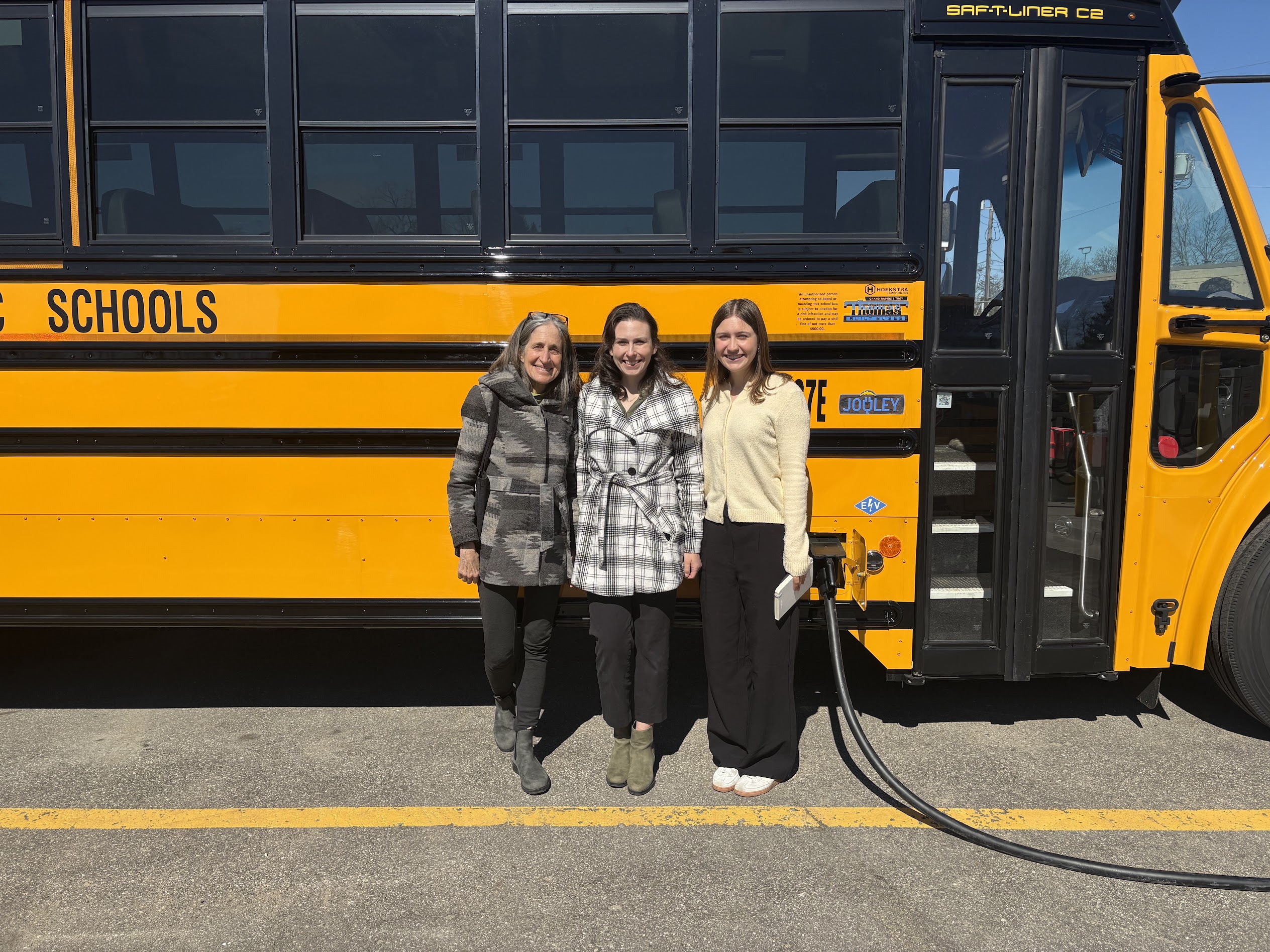
Terra with fellow ELPCers Susan Mudd & Katie Duckworth
Collectively, replacing diesel with electric school buses across the country can positively impact air pollution and greenhouse gas emissions. But nationwide numbers can feel so distant. As someone who calls Grand Rapids home, I know that this story is more than just a statistic. This is a true community effort that will improve the lives of children in Grand Rapids.
As a current high school student said on a test ride at the launch event, the difference between electric buses and diesel buses is noticeable. It is significantly quieter, allowing for easier conversation between passengers, and lacks the awful diesel smell.
Grand Rapids Public Schools is a district with 70% minority enrollment and 64.6% economically disadvantaged students. The city, especially the southeast side where several of the electric buses will service, has a long history of disproportionate exposure to environmental toxins such as lead. Not only will electric school buses decrease exposure discrepancies, they will also show the students that their community cares about them and is investing in a healthier, more sustainable future.
Students in Grand Rapids “will see that their school district is not just talking about change, they are living it,” said Aaria Wade, Vice President of the Grand Rapids Public Schools Board.
Looking Forward
As a Grand Rapids Public Schools alum, I am proud of my district for taking the step to invest in electric school buses. This is a step towards a cleaner, healthier future for the children of my community. But progress cannot stop here.
 Millions of students still ride harmful, polluting diesel buses every day. Thousands of school buses continue to pump out greenhouse gas emissions that exacerbate climate change. And with Trump’s EPA having paused new grants and rebates through the Clean School Bus Program, it has become even more difficult for school districts to access funding for electric school buses.
However, some state governments, such as Michigan and Minnesota, and utility companies, including ComEd in Northern Illinois, provided support for electric buses in the meantime. Round 4 of the Clean School Bus Program will be announced this year, although it is expected to be less favorable to schools seeking electric buses. Grand Rapids and districts across the Midwest should take advantage of these remaining opportunities and continue working to transition their school bus fleets to electric. ELPC will continue to support them along the way.