
Story
December 17, 2025
The Case for Grid-Friendly Data Centers in Illinois
By Brad Klein, Managing Attorney
Illinois policymakers have entered a pivotal window to determine how data centers will impact the electric grid. The Illinois Commerce Commission (ICC) is weighing changes to ComEd’s rate structure, while lawmakers are drafting legislation to establish long-term rules. Together, these decisions will shape Illinois’ clean energy goals, grid reliability, and electricity costs for years to come.
Data centers have already transformed electricity demand across the U.S., creating new environmental and cost challenges. We’ve heard plenty about the challenges – and less about the opportunities.
Illinois, however, is uniquely positioned to manage this growth on its own terms by attracting data centers designed to work with the grid, not against it. With a few targeted policy tweaks, the state can attract responsible, high-quality projects while building a clear legal and regulatory backbone that protects people, communities, and the environment.
The choices made today will determine whether Illinois strengthens its clean energy leadership while supporting economic growth — or struggles to keep pace with rising demand. Here’s the path that positions Illinois to lead.
Unlocking Opportunity, Not Barring It
Illinois sits at the center of a robust, modern electricity network, has access to clean energy and water, and operates in a competitive power market. It’s a place where data centers want to do business. This gives the state leverage to attract data centers that are responsible neighbors and environmental stewards, and to discourage those that aren’t.
Three priorities stand out that would allow for that:
- Require data centers to pay for the infrastructure costs they create. Data centers and other major customers should pay their fair share of the transmission and distribution infrastructure they need (poles, wires, etc.), rather than spreading those costs to all Illinois ratepayers – as ComEd is currently doing.
- Adopt a “bring your own” new clean energy model. Data centers should procure their own new clean supply and capacity to meet their electricity needs and comply with Illinois’ renewable energy goals. This not only reduces reliance on fossil generation but also protects Illinois consumers from rising energy prices.
- Protect communities from local impacts. Even if data centers themselves have low emissions, the push to power them can use polluting diesel backup generators or keep aging fossil plants online. Some facilities may also bring noise, light, or water impacts, including heavy water use. Illinoisans should not bear health or quality-of-life harms from local impacts of data center development.
Creating a Race to the Top
Data centers are in a race to secure electricity access. Illinois can turn this into a race to the top, rewarding projects that meet high environmental, efficiency, and reliability standards.
Think of it like TSA PreCheck. Travelers who demonstrate they are low-risk earn access to faster screening and better service. Illinois can apply the same principle to data centers. Projects that put in the work up front — planning for clean energy, efficiency, and grid reliability – should be rewarded with faster grid connections. This would improve throughput and efficiency for everyone.
Here’s how Illinois can ensure a race to the top:
- Lawmakers should clearly define the state’s minimum clean power standards for large-load customers. These should focus on maximizing on-site renewable energy, battery storage, and process improvements to increase efficiency and demand flexibility.
- Make clear that Illinois is open for business and is ready to fast-track electric grid connections for data centers that meet state’s clean power standards. Right now, there’s a long wait for data centers to connect to ComEd’s grid. This change allows data centers with the best applications to get to the front of the line.
- Any remaining clean energy can be procured through market contracts that provide power around the clock to meet the data center’s needs.
The principle: Do the right things, and you get to the front of the line. Companies that meet or exceed clean energy and capacity standards are rewarded with faster connections and uninterruptible service – the biggest priority of data center developers. This aligns market incentives with public benefits.
Rewarding Innovation
Illinois can protect affordability and accelerate clean energy by rewarding innovation. When grid access is strictly “first come, first served,” even the best projects get stuck behind slower, less efficient ones, giving companies little incentive to deploy smarter, cleaner designs.
A flexible interconnection framework can flip that dynamic. Under these rules, projects that bring clean capacity or reduce strain on the grid earn faster, more reliable access, while projects that do not bring their own clean capacity may face limited or interruptible service.
Clean capacity isn’t just building new wind or solar — though those are important. It also includes resources that reduce peak demand, the highest electricity-use periods that drive costs for everyone. Batteries, demand response, efficiency improvements, and virtual power plants (VPPs) all qualify because they help flatten those costly peaks and strengthen the grid. This is also known as load flexibility.
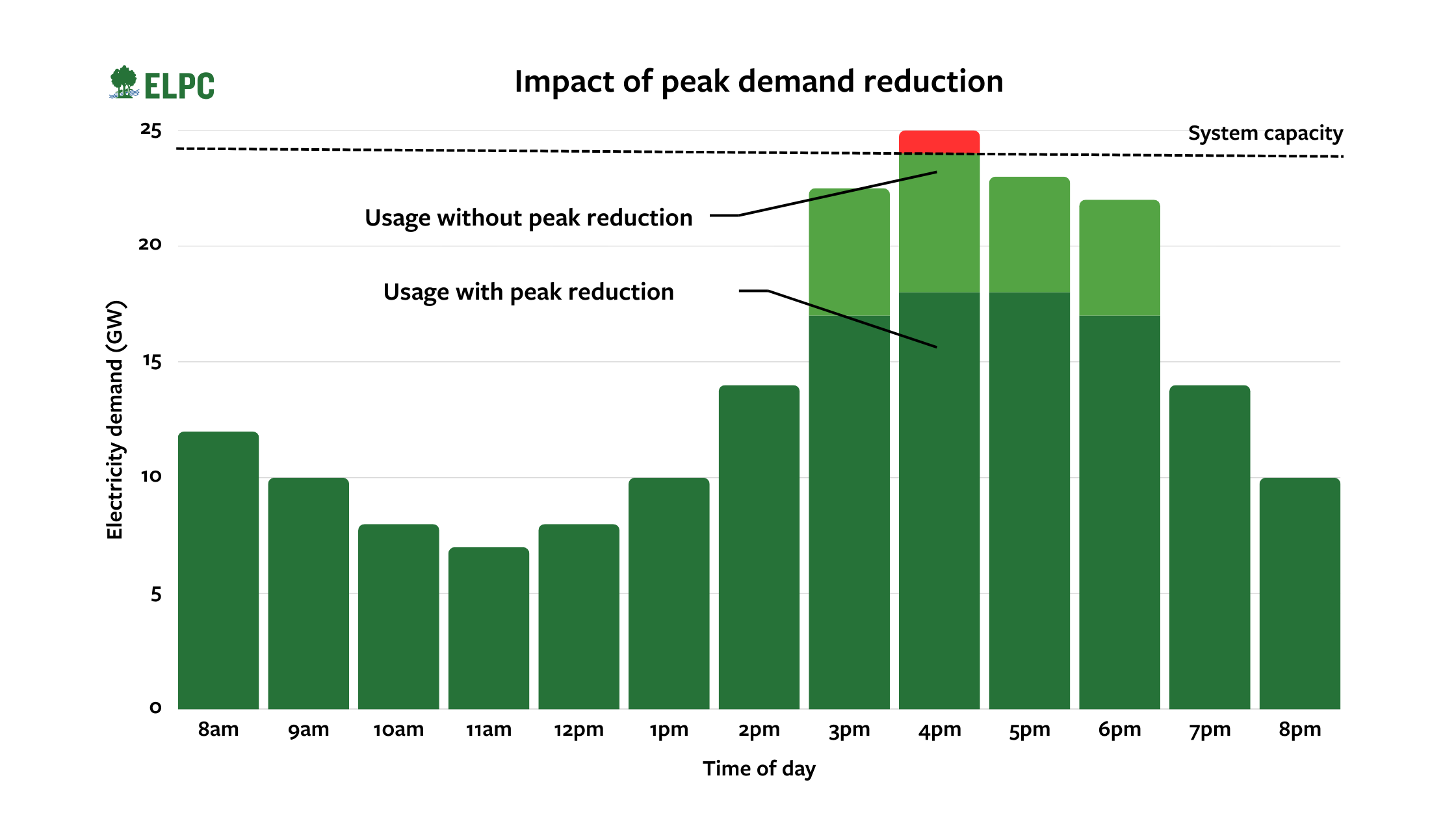
These tools exist today and provide the fastest, most cost-effective way to reduce peak demand, which in turn immediately helps rein in costs and cut emissions. Illinois should prioritize the data center projects that expand clean capacity, whether by directly generating renewable energy, funding household batteries or solar on the public grid (as proposed by Rewiring America), or supporting efficiency and demand reduction measures.
The Path Forward for Illinois
Data centers have redefined the scale of electricity demand, and the state needs clear, modern rules that protect its citizens and environment.
Meeting this challenge of data center growth requires action on multiple fronts. The Illinois Commerce Commission (ICC) must ensure that utilities advance the state’s clean energy goals, maintain a reliable grid, and keep rates fair for households and businesses.
At the same time, lawmakers have a role to play by setting clear standards for large new power users to bring their own clean capacity and tools that minimize stress on the system.
Together, lawmakers, regulators, and utilities can support economic growth while preserving affordability, reliability, and Illinois’ clean energy leadership — but only if they act quickly and follow this path.

Brad Klein,
Managing Attorney
Brad Klein is a Senior Attorney working on accelerating renewable energy policies and development across the Midwest.
MORE FROM Brad Klein