

Upper Peninsula, Michigan
Update
May 04, 2026
U.S. Forest Service Takes a Damaging Shortcut in the Ottawa National Forest
ELPC will file an objection to cursory analysis of massive Silver Branch logging proposal
By Kelly Thayer, Senior Policy Advocate
The Ottawa National Forest is one of the Midwest’s great public lands. A place defined by mature forests, coldwater streams, waterfalls, wildlife habitat, and outdoor recreation that supports local communities across Michigan’s Western Upper Peninsula. Decisions about how this forest is managed matter deeply, not just today, but for generations.
That’s why the U.S. Forest Service’s recent draft decision to move forward with its $50 million Silver Branch Vegetation Management Project without a full environmental review and consideration of alternatives is so troubling.
This proposal is not business as usual. It is the largest logging project proposed in the Ottawa National Forest in decades, affecting roughly 200 square miles of public land that extends from the northern border of the Sturgeon River Gorge Wilderness Area south to U.S. 2 near Iron River.
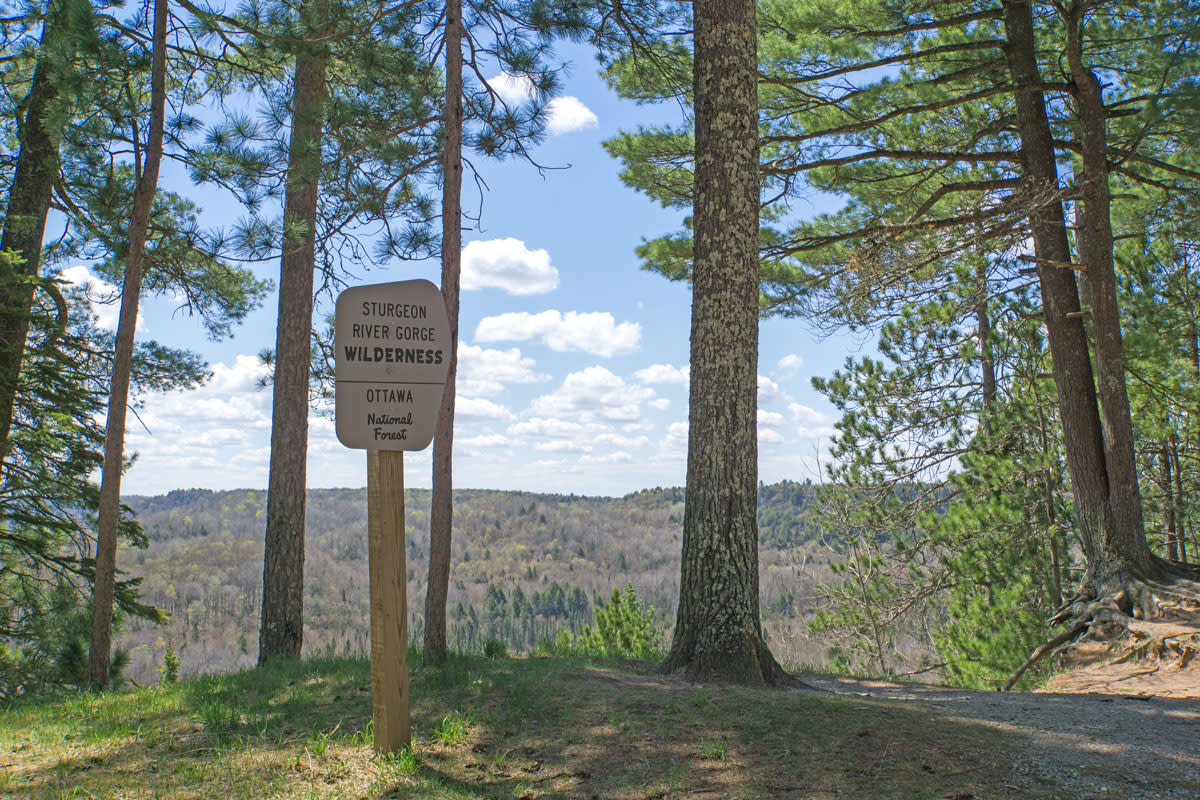
The Silver Branch proposal would authorize extensive clearcutting of aspen and paper birch trees and heavy logging of northern hardwoods across nearly 128,000 acres of the Ottawa, much of it targeting trees that are 80 or more years old.
It would log for miles along the border of the Sturgeon River Gorge Wilderness Area and log over a 2,000-acre proposed wilderness addition. It would build miles of new logging roads, expand two gravel pits, and fundamentally alter large swaths of mature forest that many people rely on for clean water, recreation, and local economic vitality.
Yet despite the proposal’s unprecedented scale and 30-year duration, the Forest Service declined requests (see joint comment and sign-on letter) from the public to prepare an environmental impact statement, or “EIS.” An EIS is exactly what it sounds like—a full environmental review to consider the project’s specific and cumulative impacts and to assess alternatives that would better protect this prized portion of the Ottawa National Forest. With a proposal of this size and scope on publicly owned lands, preparing an EIS should be the norm—and it’s what the National Environmental Policy Act requires.
Instead, the Forest Service relied on a conclusory environmental assessment that considered only a do-nothing alternative to the logging project, which arbitrarily obscured the availability of better-tailored options to meet forest management goals. The assessment concluded – against common sense and substantial evidence—that the Silver Branch logging project would have “no significant impact.”
That conclusion simply doesn’t hold up.
Proposed Logging Would Significantly Impact Forest, Wildlife, and Recreation
The eastern portion of the Ottawa National Forest proposed for logging is dominated by sugar maple, red maple, basswood, yellow birch, and other northern hardwoods, along with eastern hemlock, cedar, Eastern white pine, aspen, and paper birch. The mature forest found here provides irreplaceable habitat for sensitive and endangered wildlife, including the Northern long-eared bat, tri-colored bat, and gray wolf, as well as numerous species of sensitive plants.
The forest cover plays a critical role in protecting water quality, reducing flood risks, and storing carbon. These wild lands also provide the backbone of the region’s recreation economy, drawing anglers, hunters, paddlers, hikers, and visitors from across Michigan and the Midwest.
When forests of this scale and maturity are logged aggressively, the impacts are long-lasting. Roads and logged-over lands fragment wildlife habitat and increase wildfire risk. Sediment and runoff threaten streams, water quality, and aquatic species. Once large, older trees are cut, they are not quickly replaced, nor are the benefits they provide. These are exactly the kinds of consequences the National Environmental Policy Act requires the Forest Service to evaluate through a transparent, science‑based review with an EIS.
Instead, the Forest Service chose to take a damaging shortcut by pursuing a more cursory analysis.
That decision dismisses the voices of environmental organizations, scientists, local businesses, and community members who raised serious concerns about the Silver Branch logging proposal during the public comment process and called for a more rigorous environmental review. Many of those comments made clear that less destructive approaches could meet forest management goals without sacrificing the ecological integrity of the Ottawa National Forest.
At a time when climate change and biodiversity loss are already placing enormous strain on natural systems, weakening environmental safeguards takes the Ottawa National Forest in the wrong direction. Public lands demand careful stewardship, not rushed decisions that prioritize short-term gains over long-term resilience.
ELPC Will Challenge the U.S. Forest Service’s Silver Branch Logging Decision
For all the reasons cited above, the Environmental Law & Policy Center will file a formal objection by the June 1 deadline to the Forest Service’s draft decision to proceed with the massive Silver Branch logging proposal.
We will continue to push for what the law requires and the public deserves: a full environmental impact statement, a meaningful evaluation of impacts and alternatives, and forest management decisions grounded in science, transparency, and accountability.
The Ottawa National Forest belongs to all of us. How it is managed today will shape its future for decades to come. ELPC is committed to ensuring that future is one defined by healthy forests, clean water, thriving wildlife, abundant outdoor recreation, and strong communities.

Kelly Thayer,
Senior Policy Advocate
Kelly Thayer is a Senior Policy Advocate at ELPC. He coordinates a broad effort to establish new Wilderness in the Western Upper Peninsula of Michigan and advances the transformation of Michigan's retired coal plants into parklands, solar generation, and energy storage opportunities.
MORE FROM Kelly Thayer