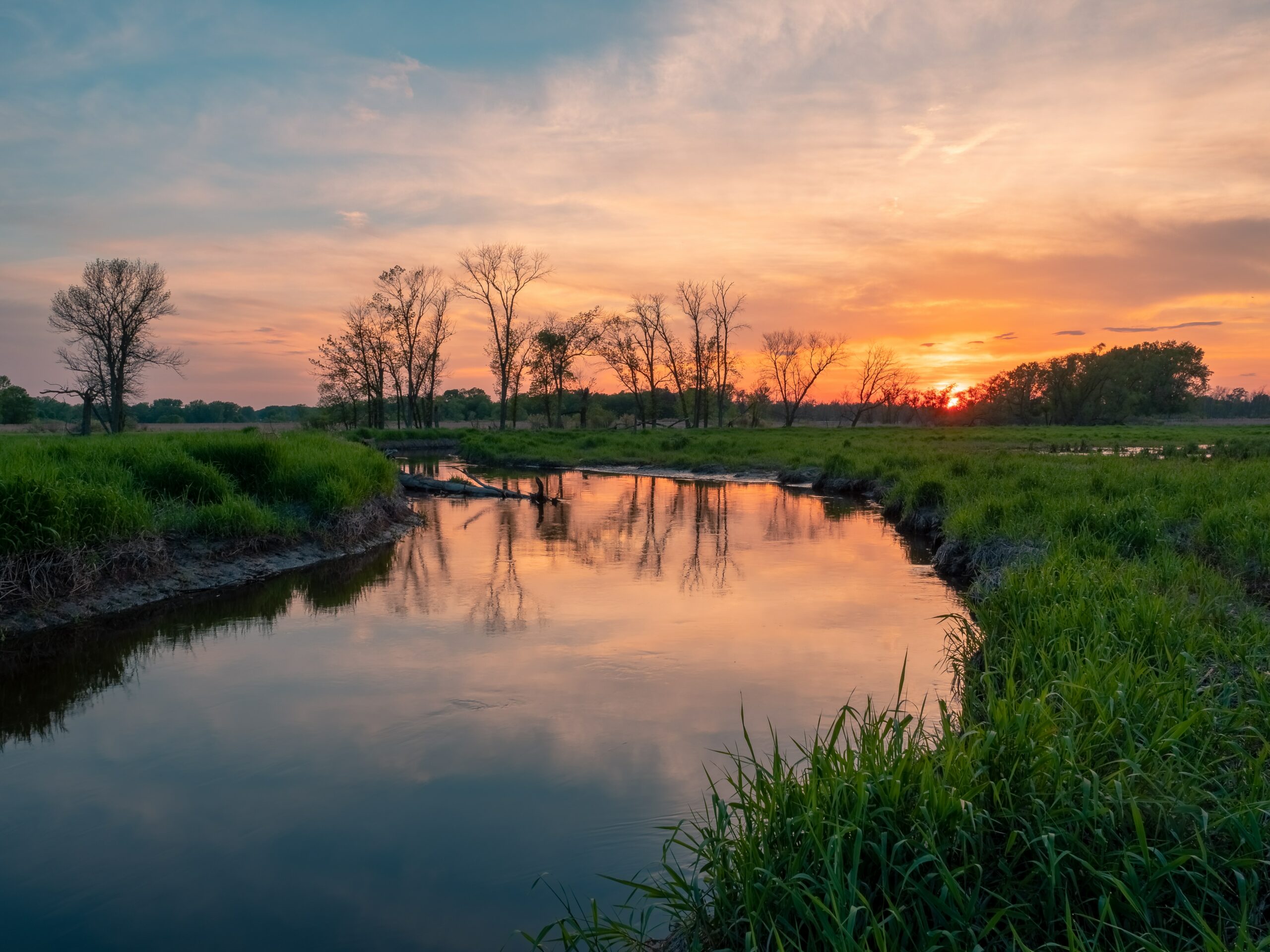
Michigan Au Sable River
Story
February 02, 2026
500 Claims, Fewer Protections: Why EPA’s “Accomplishments” Don’t Add Up for Clean Water, Clean Air, or Public Health
The Trump EPA has been dismantling long-standing environmental protections at breakneck speed, rejecting clear science and putting lives at risk
By Lena Guerrero Reynolds, Communications & Policy Advocate
On January 20, EPA Administrator Lee Zeldin marked the first anniversary of President Trump’s return to office by touting “500 environmental accomplishments.” It’s a big number but it’s not a good one. Many of these so-called accomplishments weaken environmental protections, sideline states, and put public health at greater risk. Even the core work of EPA is a shell of its former self, while this administration reduces its own capacity and prioritizes polluters.
Gutting Longstanding Protections
 Several of the administration’s flagship actions move the EPA away from its core mission. For example, take the proposed rule to change Clean Water Act Section 401. It would curtail states and tribes’ long-standing authority to protect local water quality from federally permitted projects. For more than 50 years, Section 401 has been a bedrock of cooperative federalism, empowering states to ensure that pipelines, mines, dams, and other projects do not pollute rivers, wetlands, and drinking water sources. Zeldin claims weakening 401 would eliminate “regulatory overreach,” but it would actually eliminate meaningful state oversight and leave communities with fewer tools to protect their waters. This is on top of EPA’s proposal to dramatically curtail which waters the Clean Water Act can protect.
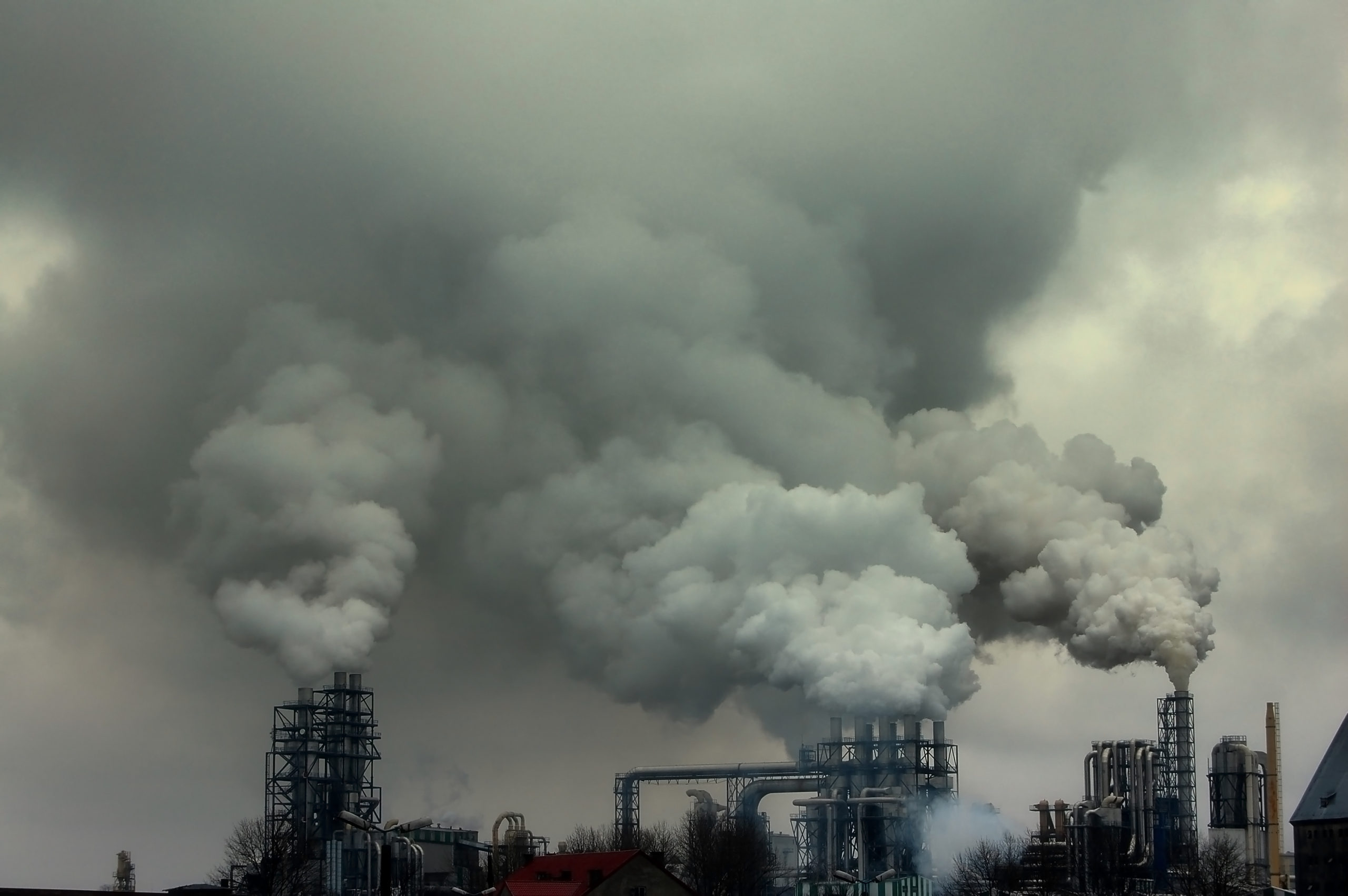 On the air side of things, just last week EPA decided that the value of human life is effectively $0. For decades, administrations have grappled with how to balance the costs to industry for reducing pollution vs. the benefits of protecting the public. In air regulations until this year, EPA put the value of a statistical life around $11.7 million. this measure to fairly account for the potential public health benefits of federal regulations has helped to clean up smog and protect the public from asthma attacks, missing school or work, and expensive hospital visits. Cleaner air has prevented hundreds of thousands of premature deaths from air pollution. Living healthier and longer is worth a lot to most of us, but corporate polluters usually push for a lower human life valuation so they won’t have to pay as much to cut pollution spewing into the air. The number has fluctuated between high and low, but it has never before been $0. Now, EPA will continue to account for the costs for pollution control technology but decided the other side of the equation no longer matters: all the impacts of dangerous pollution in the air we breathe and all the healthcare costs we’ll have to pay because of it.
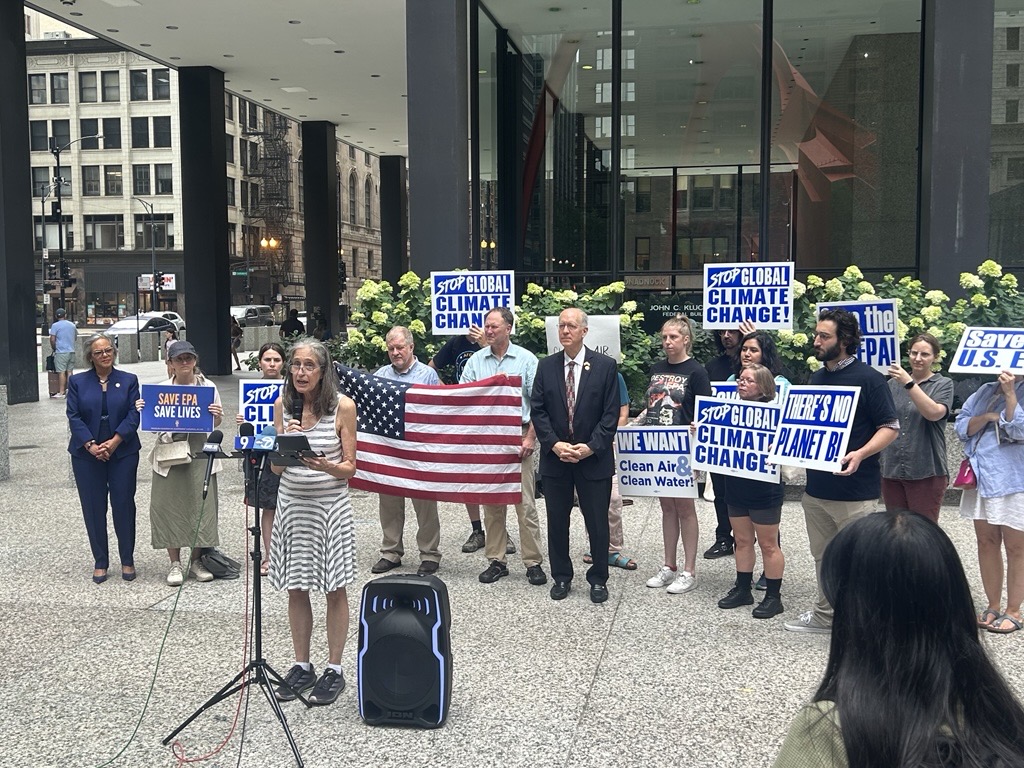
ELPC speaks in support of EPA workers
And this week, EPA is expected to drop its final rule to undo the 2009 “Endangerment Finding,” the scientific basis for greenhouse gas regulations from motor vehicles. Climate change is a growing threat around the world and right here in the Midwest. ELPC recently released an update on the impacts of climate change in the Great Lakes region, authored by Big 10 university scientists. It shows warmer, wetter, and wilder weather is increasingly endangering the public right here in our own backyard. It is unconscionable to see an EPA that would gut its own ability to protect public health and the environment. But these are just a few examples of the constant rollbacks that ELPC and our colleagues are fighting like whack-a-mole.
Underperforming Core Functions
The vast majority of items on this list of “500 accomplishments” are basic requirements that EPA should be doing every day: approving permits, reviewing applications, monitoring compliance, approving cleanups, etc. But there should probably be a lot more of them.
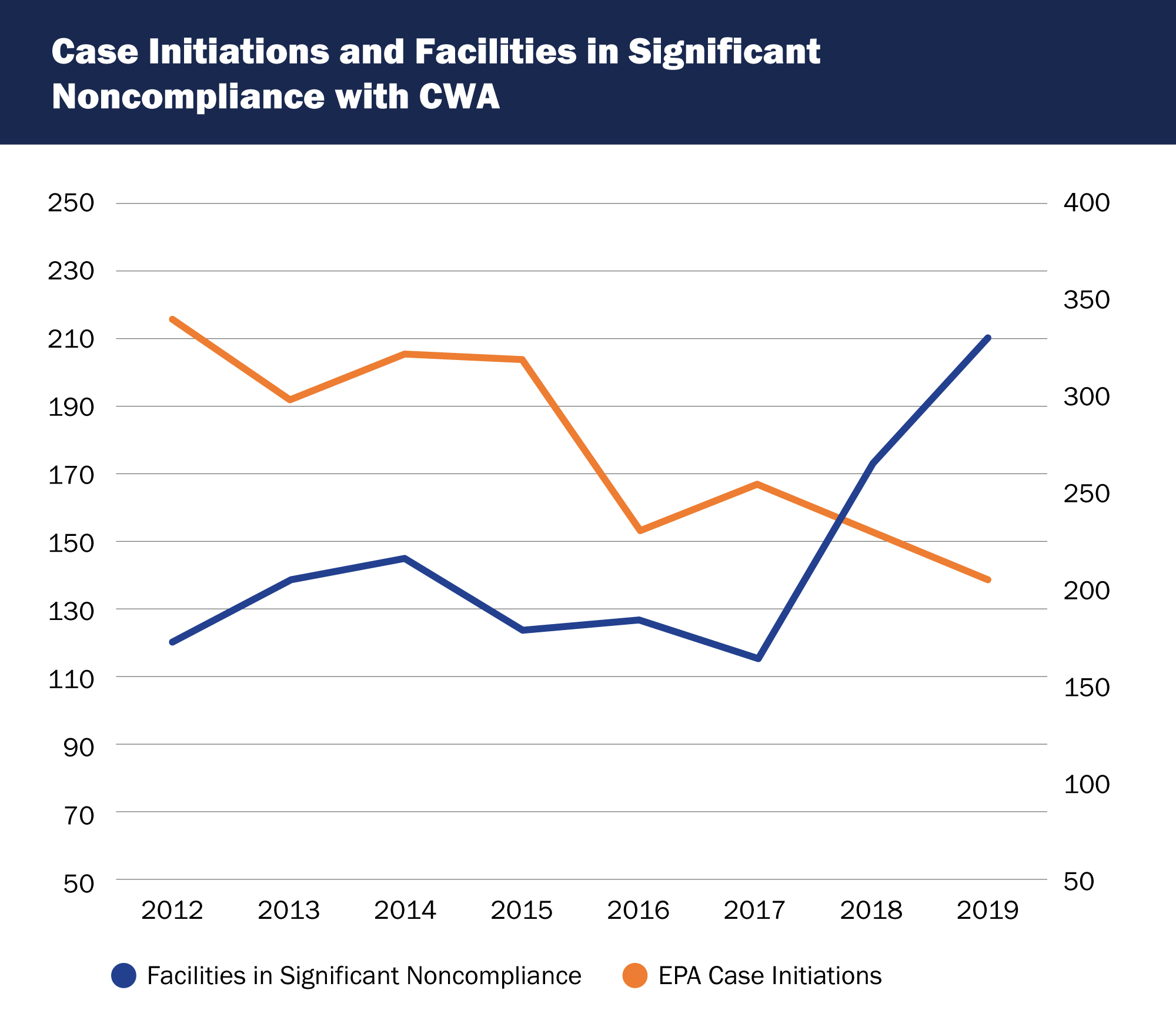
EPA Region 5 declining enforcement and rising noncompliance (click to enlarge)
In just one year of the second Trump administration, 2,300 employees “have been separated from EPA.” The agency is expected to dwindle to only 12,500 people by the end of the fiscal year, down from over 17,500 in 2011. We’ve seen billions of dollars in cancelled grants, EPA’s research branch gutted, its inspector general fired in a government-wide purge, and pollution reports that have been issued regularly for fifty years are on pause. Under the first Trump administration, ELPC analysis found that as enforcement levels dropped, compliance got worse in both Region 5 (Great Lakes) and Region 7 (Great Plains). Polluters get away with more if EPA does less.
We would all love an EPA that delivers “clean air, land, and water to all Americans,” but Zeldin’s lofty words are far from reality. This administration is making it more difficult by the day for the remaining dedicated EPA workers to do their jobs well.
Watch What They Do, Not What They Say
This administration claims credit for pollution reductions, but in other ways pollution is up. EPA is starved for the staff needed to conduct enforcement, and it has weakened or delayed safeguards that prevent pollution in the first place. A healthy environment requires both people and strong rules; otherwise, it’s an empty promise.

Kids deserve clean water
Environmental protection is not measured by the length of a list or the polish of a press release. It’s measured by whether our rivers are swimmable, our drinking water is safe, our air is breathable, and our communities – especially those already overburdened – are protected from harm.
On those measures, the administration’s record falls short. Real environmental leadership strengthens safeguards, respects state authority, honors its own workforce, and puts public health first. Americans deserve clean air and water not just in talking points, but in practice, and that requires an EPA willing to enforce the law, not redefine it away.

Lena Guerrero Reynolds,
Communications & Policy Advocate
Lena Guerrero Reynolds is the Communications & Policy Advocate at ELPC, where she works to educate our supporters with our impact and advance clean transportation opportunities across the Midwest.
MORE FROM Lena Guerrero Reynolds