
Story
July 25, 2026
Checking Up on Kirtland’s Warblers in Michigan
In 2025, ELPC stepped up to defend a rare ground-dwelling Michigan bird, Kirtland's Warblers, so I decided to visit their habitat this year.
By Wendy Bloom, Senior Attorney
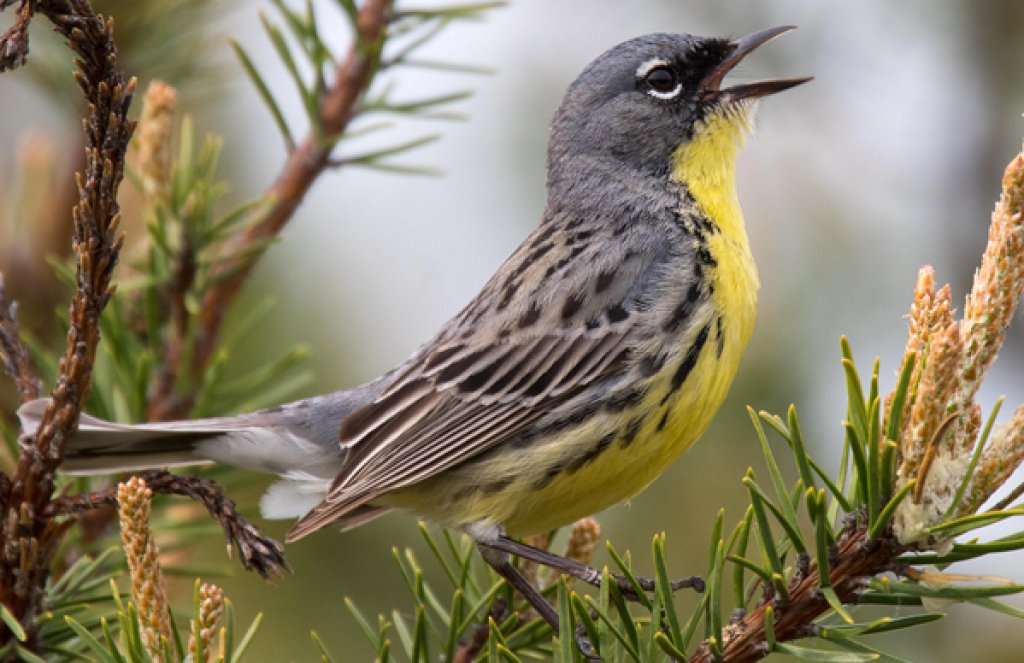 Immediately after our ELPC Gala in June, I continued from Navy Pier on to Grayling, Michigan to check up on the Kirtland’s warblers, which are one of the rarest songbirds in North America. Last June, 2025, as a result of ELPC comments submitted to U.S. Fish & Wildlife Service (FWS), the agency agreed to include protections for the nearly-extinct Kirtland’s warblers in a right-of-way permit renewal for the Saginaw Bay Pipeline Company in the Kirtland’s Warbler Wildlife Management Area which is spans eight counties in Michigan’s Lower Peninsula.
In working on our ELPC comments, I learned that Michigan Audubon offers tours each summer near Grayling to see and hear Kirtland’s warblers as they return to nest. My husband and I decided last summer that we would make it a priority to check up on the Kirtland’s warblers this summer, and so we did just that, with our friend Heidi joining too.
Why are the Kirtland’s warblers in need of help?
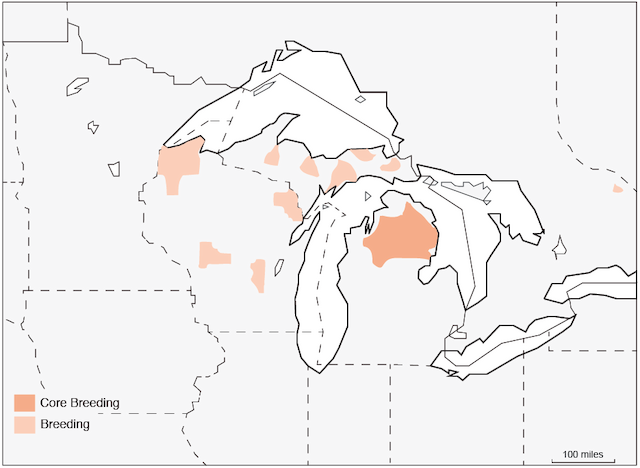
Kirtland’s Warbler nesting range map
Although the Kirtland’s warbler is a success story because it was removed from the federal endangered species list in 2019, the bird is not “out of the woods.” Instead, Kirtland’s warblers remain on Michigan’s threatened species list, and they are considered a “conservation-reliant” species. This means that without ongoing, intensive management, the species is at risk of sliding back toward endangerment. Unfortunately, the last full Kirtland’s warbler census, conducted last summer during June 6-26, 2025 counted only 1,477 singing males, and an overall 32% decrease from 2023, and the next census is set for 2029.
These birds are very picky when it comes to nesting. They will only nest in young jack pine forests by building nests on the ground under the trees, and most all these trees are in Michigan’s Northern Lower Peninsula. Mature jack pine do not work because their lower branches are too far from the ground to hide the birds’ nests. As a result, US Forest Service, Michigan Department of Natural Resources, US Fish and Wildlife Service, and conservation groups work to manage state, private, and federal lands to maintain this habitat for the Kirtland’s warbler.
What did ELPC do to help?
 In November 2024, ELPC was the only group to submit comments on an application by Saginaw Bay Pipeline company to renew its right-of-way permit within the Kirtland’s Warbler Wildlife Management Area, which was created in 1980 to protect the endangered birds. As a result of ELPC’s comments, drafted by myself and Nick Wallace, US Fish and Wildlife Service added important protections for the Kirtland’s warblers that the pipeline company must follow for any work it conducts in the right-of-way to the agency’s final compatibility determination issued on May 27, 2025, at the start of last summer’s nesting season.
My visit to see and hear the Kirtland’s warblers
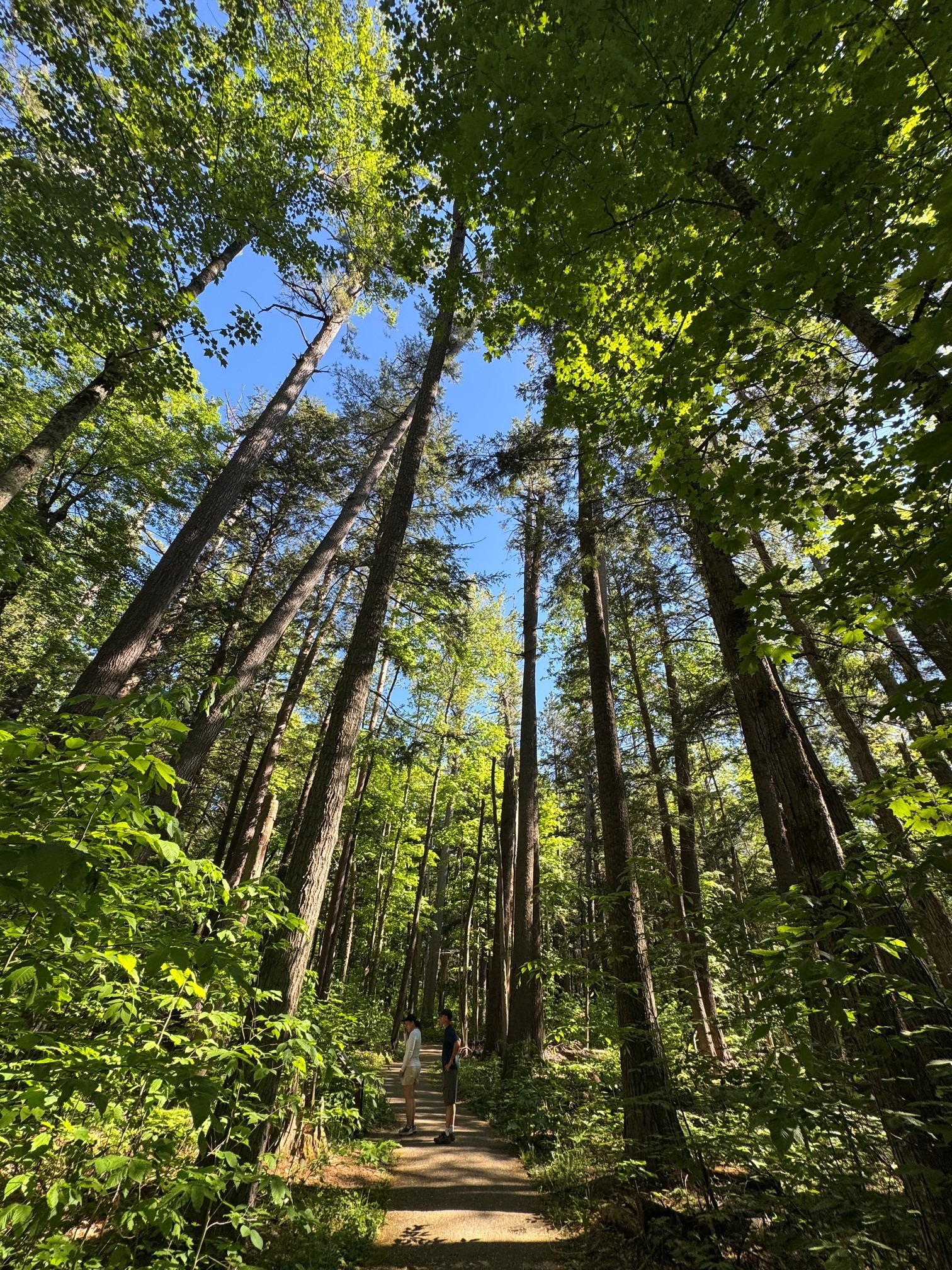
The area around Grayling is considered the core of Kirtland’s warbler’s nesting range, so Michigan Audubon tours to see the bird meet up at Hartwick Pines State Park. I highly recommend walking through the old growth pine forest there before the tour to see these amazing pines that are 300-400 years old.
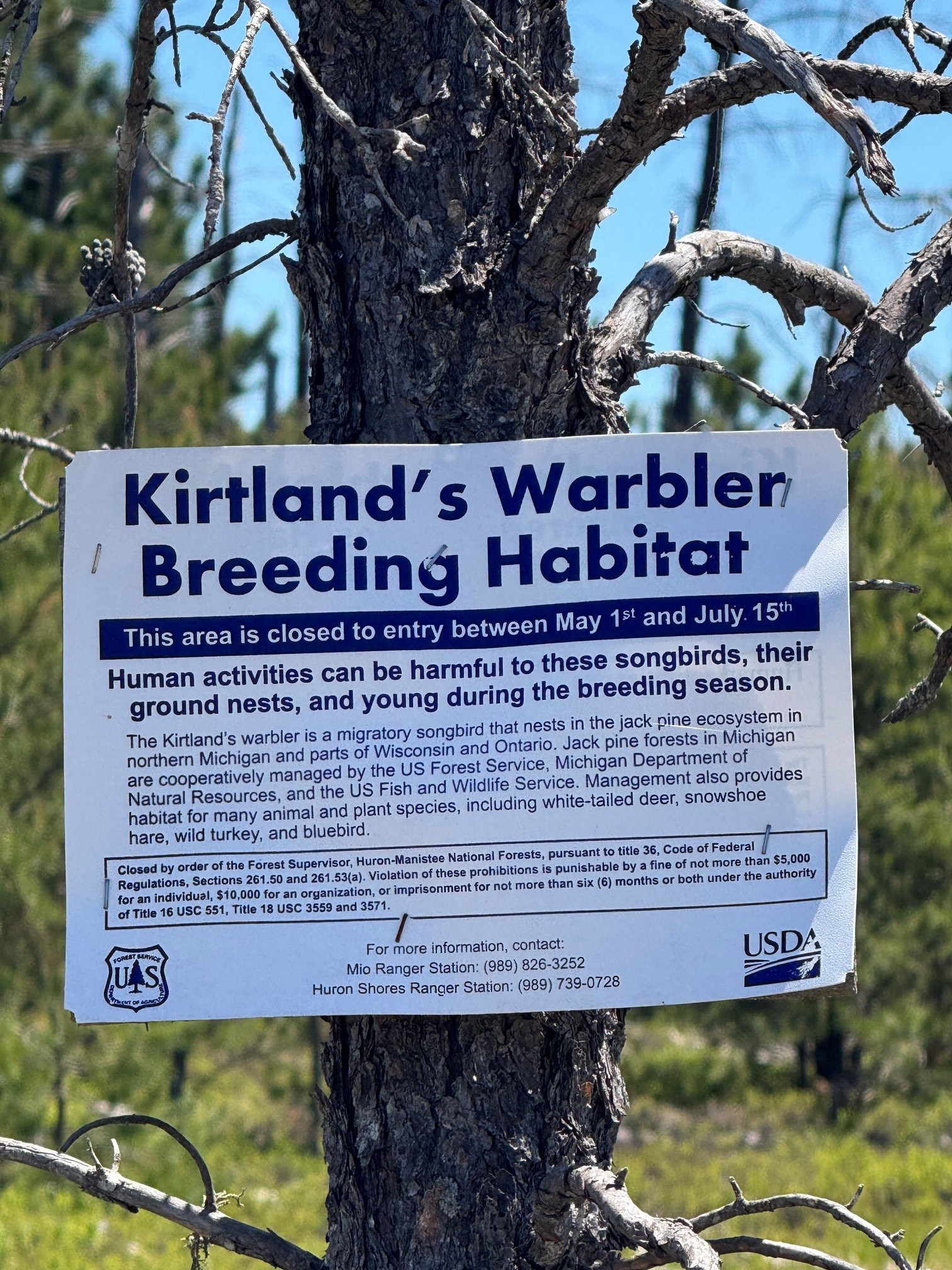 Kirtland’s warbler tours are offered by Michigan Audubon in late May to late June as the male Kirtland’s warblers are attracting female birds to their respective territories to nest. Once the baby warblers hatch, the males go quiet to protect the young and there are no tours in order to allow the babies a chance for success. Between August and September, all the Kirtland’s warblers fly south to winter in the Bahamas.
Here is the link for tickets: Kirtland’s Warbler Tours Michigan Audubon. I recommend purchasing tickets in advance because they do sell out. Our tour was sold out.
After meeting up, you’ll get in your car and caravan with the tour guide to a breeding area that Michigan Audubon has identified. Our group saw and heard six or so singing males, which was super exciting. Our guide handed us each an “I got a Lifer” sticker since this was the first time for all of us seeing and hearing a Kirtland’s warbler.
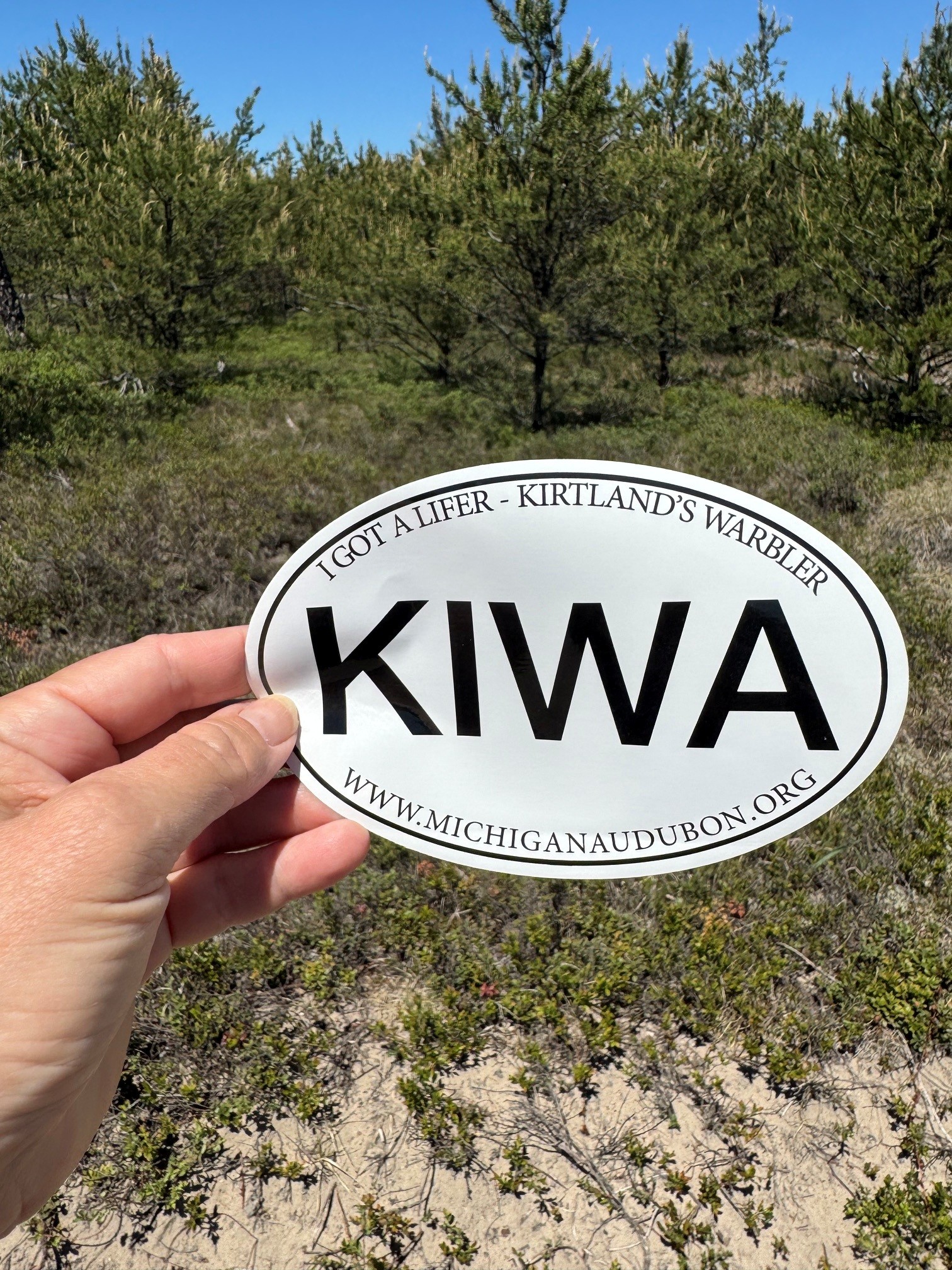
Sticker for first-time Kirtland’s Warbler viewers
The male Kirtland’s warblers make a very distinctive “cheep, cheep, wee, wee” call to mark their respective territories. I’ve included a video of my favorite male, who is tagged, so biologists know that this is his second trip back from the Bahamas to Grayling.
On the tour, you can appreciate why the Kirtland’s warblers do well in young jack pine forests because you’ll see how the lower branches of the trees do cover the ground to protect the ground nests they build. Hearing these songbirds live was a true joy that I highly recommend.
Northern Michigan’s Many Gems
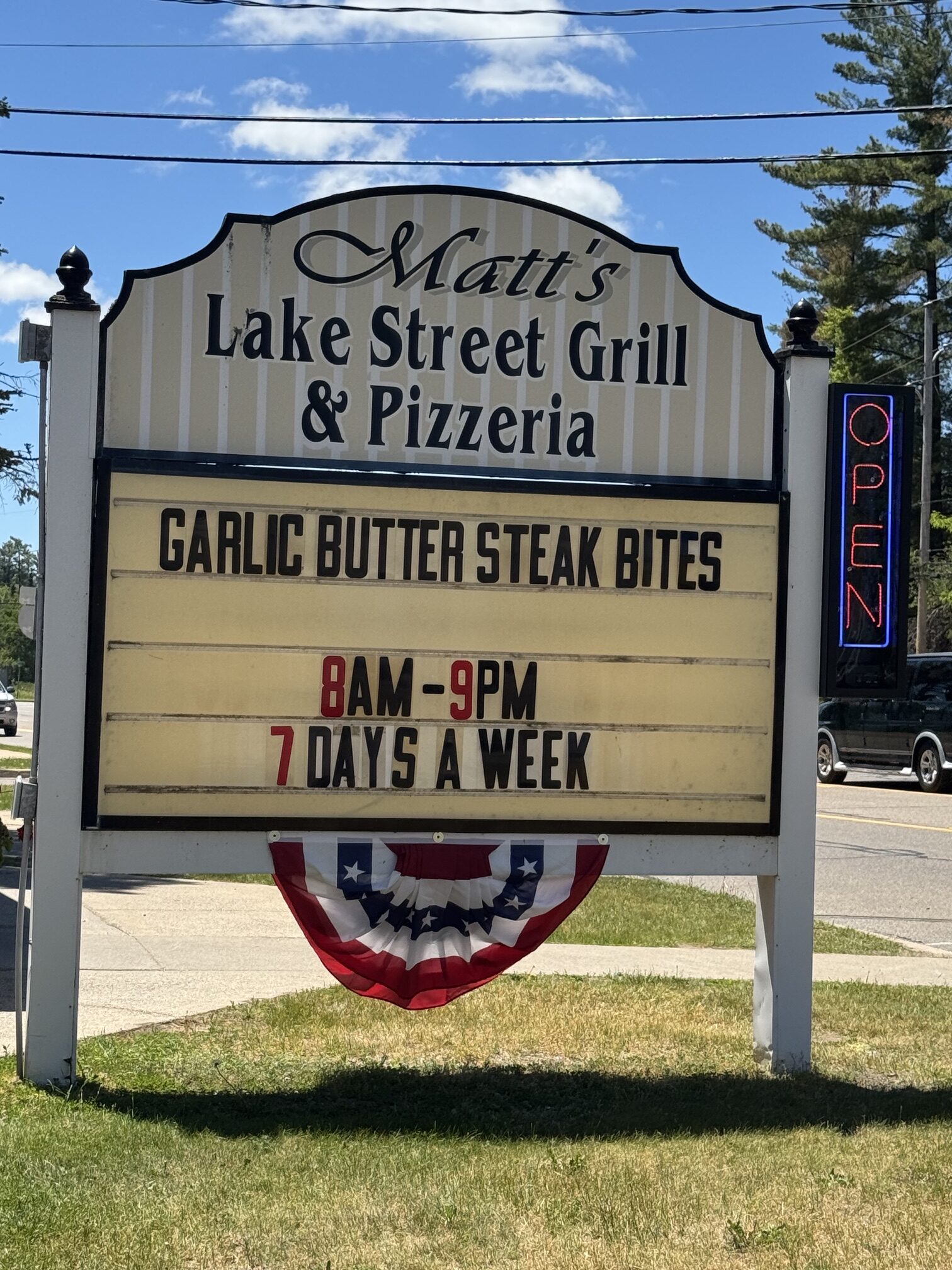 Lots to do in and around Grayling as well and good restaurant options in town. We had fun paddling on the AuSable river. And, huge shout out to Fatbelly Deli & Creamery in Stanwood where we stopped for lunch on the way to Grayling for sandwiches and locally made ice cream.
The drive from ELPC’s Navy Pier Gala to Grayling was a bit too long for us to make in the evening, so we did overnight in New Buffalo, and huge shout out as well to Nancy’s for their strawberry milkshakes and David’s Delicatessen & Coffee for breakfast.

Wendy Bloom,
Senior Attorney
Wendy Bloom is a Senior Attorney at ELPC with a focus on protecting the Midwest's wild and natural places and Great Lakes.
MORE FROM Wendy Bloom